
During the Olympics in 2008 the athletes will have to tell the anti-doping organisation were they are every two hours. Not only during the games but also in the weeks leading to it (link).
I agree with the fact that we have to check atletes on the use of doping but forcing somebody to tell you where you are every two is over the top. I think we have to take a step back and look how we can do this without invading the privacy of the athlete.
BBC NEWS | Politics | UK bans non-EU unskilled workers
It looks like to UK is introducing Dutch (Verdonk) like measures.
Do national payment systems get another chance?
The EU’s antitrust chief Neelie Kroes warned banks on Monday that a new payment system should not be allowed to cut down choice or increase costs for customers.
….
Kroes suggested that national card payment schemes should be encouraged to join the SEPA scheme because that would introduce and increase competition to the benefit of merchants and customers.
The EU competition commissioner said she was working hard to wrap up an ongoing antitrust case against MasterCard Inc. The European Commission last year charged the credit card provider with illegal price fixing for setting the fees retailers must pay for accepting MasterCard and Maestro branded cards, saying this limits competition between banks who use the xservice.
“We want this decision to provide the industry with a solid competition analysis of the MIF as applied by MasterCard,” she said.
Kroes earlier signaled that Visa may also face further trouble ahead. In 2002 it won a temporary exemption from EU antitrust rules that allowed it to strike deals on interchange fees with banks that it might usually compete with.
This exemption expires at the end of the year and Kroes said in October that she was unlikely to simply extend it, warning that she had “the feeling that something should be done.”
Regulators have criticized the high level of these fees, saying card networks like Visa, MasterCard and American Express have failed to explain why they need to charge so much for handling payments.
This could mean that national systems could get another chance. Good!
The death of e-mail
Chad Lorenz wrote in Slate an article about the “Death of e-mail”. It was picked up by Thomas Hawk on his blog who celebrated it this development and said:
And I read this article and can’t help but keep muttering inside, “Yes. Yes! YES!!!! Die email die!”
Increasingly email is playing a smaller and smaller role in my own life. I used to spend hours every day in email. Checking my email. Answering emails. Following up. Sending my own email to others and merely perpetuating the problem. Email sucks. Now I spend maybe 30 minutes a day skimming my email, ignoring most of them, deleting most of them. Answering a few.
At present I have 3,002 messages in my email inbox. Of these 2,794 are unread. And this is already after committing email suicide once. One of the fortunate by products of my Mac’s hard drive recently failing was that it wiped out all of the 5,000+ messages that I could never quite get to.
Thomas was missing the point that Chad was making in his piece. Besides the fact that Thomas has a time management problem, it is about how we use communication devices and how we communicate these days.
Basically, contacts and communication have become more superficial and more casual. Take a look at how sites like Hyves, MySpace, Twitter and FaceBook operate. You sign up to the service and you try to expand your list of ‘friends’. Before you known you have hundreds of people who call themselves a ‘friend’ of you. But how many of those friends are really friends and how many are part of the service?
Last year an experiment was conducted in the Netherlands with some kids. As with most kids they were constantly texting their friends during the day. In the experiment they took away the cellphone for a week and looked what the effect off that was on their circle of friends. The most frustrating conclusion (for the kids) was that none in the circle of friends had missed them that week.
Another survey looked at how kids used e-mail addresses, login accounts and other identifiers on the Internet. I find one of the most frustrating things when somebody changed his e-mail address but has not informed me about this. This is one of the reasons why I took a personal e-mail address which I can take with me to any provider. The survey showed that kids just dumped e-mail addresses, changed login accounts when they forgot the password. Basically they did not care about the worries I had of being reachable on the net.
Sure, collaborating and Instant Messaging tools have found their ways into the corporate world. But that is simply because there is a business case. These tools enable organization to become more flexible, use resources and people more efficient and to respond quicker to opportunities. But they won’t eliminate e-mail. E-mail will remain the only formal way of communication in a company and kids moving into the corporate world will have to learn to communicate via formal channels. Maybe we can learn them something?
Amazon Kindle
Robert Scoble has published his one-week review of the Amazon Kindle. The Amazon Kindle is an eBook Reader much like the Sony Reader and the iLaid from iRex Technologies.
Of the six comments Robert has, some of them are legit but most of them show that he is looking at this too much from a PC point of view.
What is an eBook Reader and what should an eBook Reader be like.
An eBook Reader is an device which should give an user the same user experience when he/she is reading a newspaper or book. That includes:
- Be quiet, no fans, no humming, etc.,
- Always on, always available,
- Size should be book-, tabloid- or full newspaper size,
- Weight should be light,
- It should be flexible like paper,
- User Interface should that of a book or newspaper.
As it is an electronic device, it should be able to:
- Refresh content, subscribe to e.g. newspapers and libraries,
- Connect Wireless and not be dependent on a connection with a PC,
Suggestions like:
- No Social network,
- No touch screen,
- No ability to send electronic goods to anyone else,
are nonsense and show that Robert is trying to make an eBook reader yet another PC.
The Kindle looks like a nice device but is still no replacement for the user experience of an actual book and newspaper.
Apple sucks!
I am a regular reader of Robert Scoble‘s blog since he popped up on the Microsoft Channel 9 website. Last Saturday he wrote a most amusing piece about the “Brand promise of Apple” and how, in his view, does not match up with the promise.
Apple’s promises:
- Apple will always work,
- Everybody can use an Apple,
- Apple is better that the ‘other brand’.
1) Apple’s will crash. Either due to hardware failures or software failures.
2) Most people can ride a bicycle. That does not mean that everybody can repair a bicycle? So why does Apple have a “Genius line” in their US Apple shops?
3) This is rather a bold statement from a company with not more than 5% market share in the US and even less presence in Europe and Asia. I would say that Apple is where Sun was some 5 years ago. Apple produces software which can and may only be run on hardware which is produced by Apple. Comparing Apple to the “other brand” is like comparing potatoes to strawberries.
Fuck you Adam Curry!
Great website (http://www.fuckyouadamcurry.com).
Some guy started a new website on which he is going to post his comments on the podcast of Adam Curry. His beef is that Adam is always complaining about how busy he is and that he hardly has time to make his “daily source code” show.
The dude is right. The show is not daily and there is no excuse why Adam cannot make an upload daily. He has all the technology, iriver iphone, wifi, nokia, etc.
McLaren bashing continues
Bernie Ecclestone warns FIA over title reversal
If a formula 1 car uses a front wing which does not comply with the regulations then the results are scrapped. If a car uses full which does not comply with the regulations then nothing should happen?
Chicken gone bankrupt

The manufacturer of the Kip caravan has gone bankrupt due to bad results in Belgium where other models (Beyerland and Chateau) are made. This won’t mean that the number of caravans on the road during the summer will go down.
McLaren bashing continues
From the Guardian:
There was more bad news for McLaren yesterday when the FIA president Max Mosley said that not only was it unlikely that Hamilton would be crowned 2007 world champion, even if the team’s appeal against the stewards’ decision not to penalise BMW Sauber and Williams for breaching fuel regulations in the Brazilian grand prix were successful, but the 22-year-old Briton could start the 2008 season with a negative points score should Ferrari’s intellectual property be found to have been used in his car.
“Ferrari data was in the hands of the [McLaren] chief designer at precisely the moment he was designing the 2008 McLaren,” Mosley said. “The difficulty we have is that we are not going to find a part that was designed by Ferrari. What you may find are ideas and at this level of technology, if the idea is given to the chief designer he will make a component utilising that idea which bears no relation at all to the component being used by the other car.
“So we will be looking for the ideas. The investigation will be thorough and it will use outside experts. We will do everything we possibly can to make sure that neither of the McLarens has any element of Ferrari intellectual property in it. Or, if it does, we will then have to consider taking some sort of action. That would not necessarily prevent them from running, it would be more likely that they would be given a negative point allocation.”
A McLaren spokesperson said: “We have no comment other than that we will cooperate fully with the FIA. Bring it on.”
A Ferrari source suggested managers at the Italian team would be best qualified to know what, if any, innovations on the McLaren are the fruits of espionage. “Ferrari knows what was passed to McLaren and what can be used,” he said. “It is not necessarily about copying but about gaining advantage by knowing what the other side is doing. When you play poker and know what cards your opponent has, you have an immediate advantage.”
sigh.
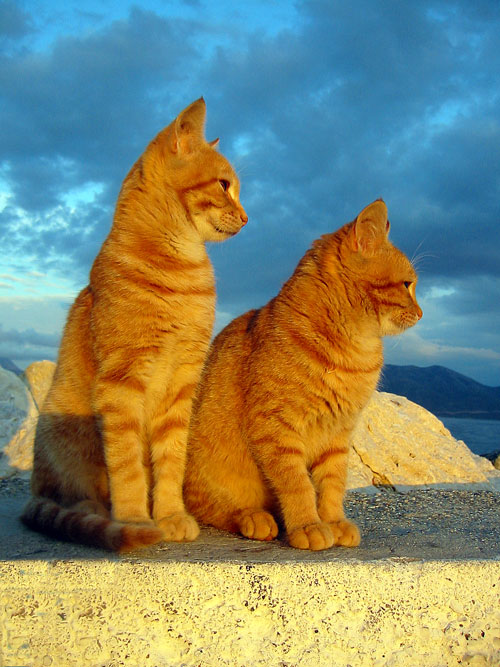
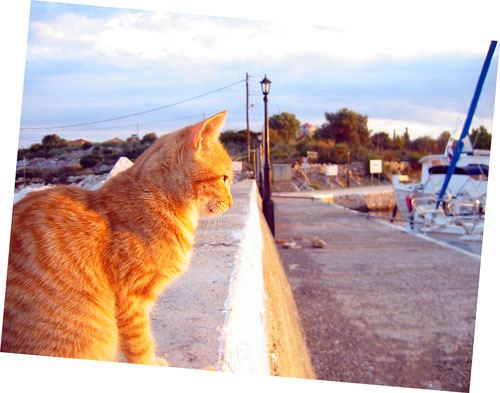
Back from sailing in Greece
Hirsi Ali Offered a Safe Haven in Denmark
It is good to see that Denmark is offering Hirsi Ali a safe haven to stay (link). Criticism that the Dutch government is failing in this area is not completely fair and correct.
Hirsi Ali was protected in the Netherlands during the time she was receiving threads and would she have remained in nthe Netherlands she would have received protection during that stay. She decided to move to the US partly because she was offered a prestigious job in a conservative Think-tank, partly because if she would have remained in the Netherlands she would have had to live here under a constant protection program.
She was told that if she was moving to the US she would have to consider that the US wouldn�t automatically protect her and that she would have to hire her own protection. That Denmark is offering Hirsi Ali a safe haven is more a criticism towards the US that they are not providing a safe haven than the Dutch government is lacking.
Personally I would have preferred if the Dutch government would have given her some kind of protection in the US, maybe in collaboration with US government.